
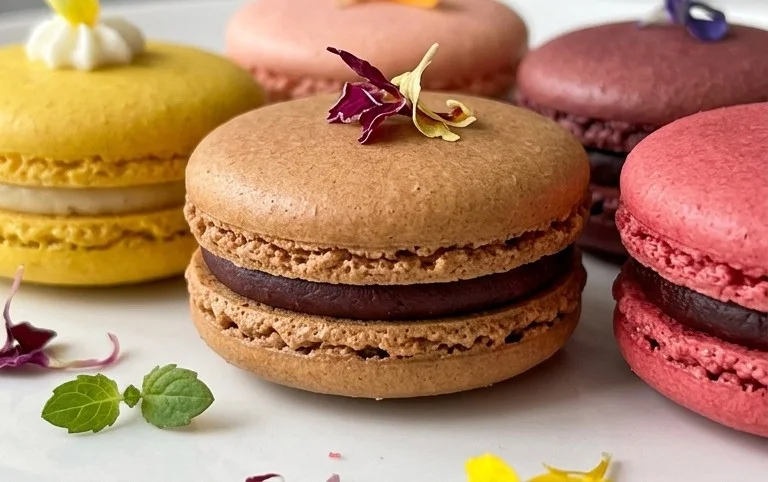
French Macaron Recipe: The gateway to delicate, delightful, and utterly irresistible French macarons. There’s something undeniably magical about these pastel-hued meringue cookies, isn’t there? They’re more than just a dessert; they’re a tiny masterpiece, a burst of joy in every bite. We all adore French macarons for their ethereal texture – that perfect crisp shell that yields to a slightly chewy interior, all cradled by a luscious filling. What makes them so special? It’s the alchemy of simple ingredients transformed into something truly extraordinary. Mastering the French macaron recipe might seem daunting, but I promise, with a little patience and the right guidance, you too can create these iconic treats that are sure to impress everyone from your discerning friends to your own sweet tooth. Get ready to embark on a delicious adventure!

French Macaron Recipe
Embarking on the journey of making French macarons can feel a little daunting, but with patience and precision, you’ll be rewarded with these delicate, delightful, and undeniably elegant cookies. These tiny almond meringue cookies with a creamy filling are a true testament to the art of baking. The key to success lies in understanding the science behind them – the balance of ingredients, the technique of folding, and the crucial resting period before baking. Let’s get started!
Ingredients:
Instructions:
Preparation is Key
The first crucial step is to prepare all your ingredients and equipment. Accuracy is paramount when making macarons. Weighing your ingredients, especially the almond flour and egg whites, is far more reliable than using volume measurements. Ensure your egg whites are at room temperature; this helps them whip up into a stable meringue more effectively. If your almond flour isn’t super-fine, you can pulse it a few times in a food processor, but be careful not to over-process it into almond butter. Sift the almond flour and powdered sugar together at least twice, and ideally three times, through a fine-mesh sieve. Discard any larger almond pieces that remain in the sieve. This ensures a smooth macaron shell. You’ll also want to prepare your baking sheets by lining them with parchment paper or silicone baking mats. If using parchment, you can pipe circles onto the underside of the paper beforehand to act as guides for piping consistent-sized macarons.
Making the Macaronage
In a medium bowl, combine the sifted almond flour, powdered sugar, and salt. Whisk them together thoroughly. In a separate, clean bowl of a stand mixer fitted with the whisk attachment (or using a hand mixer), add the room temperature egg whites. Start whisking the egg whites on medium speed until they become foamy and opaque, resembling sea foam. Gradually add the granulated sugar, one tablespoon at a time, while continuing to whisk. Once all the sugar is incorporated, increase the speed to medium-high and whisk until stiff, glossy peaks form. This means when you lift the whisk, the peaks stand straight up without drooping. This is your meringue. Now, it’s time for the dreaded “macaronage,” which is the process of folding the dry ingredients into the meringue. Add about a third of the dry ingredient mixture to the meringue. Using a spatula, gently fold the dry ingredients into the meringue. Be careful not to overmix. Scrape down the sides and bottom of the bowl and continue folding. Add the food coloring and vanilla extract at this stage and continue folding until just combined. The mixture should start to look like molten lava. You’re aiming for a batter that flows like thick ribbon, where it slowly drips off the spatula in a continuous stream that forms a figure-eight pattern. If it’s too stiff, it will be lumpy. If it’s too runny, your shells will spread too much and won’t have feet. This stage requires a gentle but thorough touch; overmixing will deflate the meringue and result in flat, cracked macarons.
Piping the Shells
Transfer the macaron batter into a piping bag fitted with a round tip (about 1/2 inch). Hold the piping bag vertically, about half an inch above your prepared baking sheet, and pipe small, uniform rounds, about 1 to 1.5 inches in diameter. Leave about an inch of space between each macaron to allow for spreading. To achieve consistent sizes, use your pre-drawn guides on the parchment paper. Once piped, firmly tap the baking sheet on your countertop several times. This helps to release any trapped air bubbles that could cause the macarons to crack during baking and also helps to settle the piped batter into smoother rounds. Examine each piped macaron for any stray peaks and gently smooth them down with a damp fingertip if necessary.
The Crucial Resting Period
This is a non-negotiable step for perfect macarons. Let the piped macarons sit at room temperature for at least 30 minutes, or up to an hour, depending on the humidity in your kitchen. You’ll know they’re ready to bake when they form a skin. This means you can gently touch the surface of a macaron, and your finger won’t stick to it. This skin is what allows the characteristic “feet” to form during baking. The feet are the ruffled edges at the bottom of the macaron shell, and they’re a sign of a well-made macaron.
Baking to Perfection
Preheat your oven to 300°F (150°C). It’s essential to have a properly calibrated oven. If your oven tends to run hot or cold, an oven thermometer is a worthwhile investment. Bake the macarons in batches, one sheet at a time, on the middle rack of your oven. The baking time will vary depending on your oven, but typically takes 12-15 minutes. You’ll know they’re done when the shells are firm and don’t wiggle when gently nudged. They should lift cleanly off the parchment paper. If they stick, they need a few more minutes. Let the macarons cool completely on the baking sheet before attempting to remove them. Trying to remove them while warm will likely result in them sticking and breaking.
Filling and Maturing
Once your macaron shells have completely cooled, it’s time to fill them. Pair up similarly sized shells. Pipe your chosen filling (like the vanilla buttercream) onto the flat side of one shell, and then gently sandwich it with another shell. Press down slightly to distribute the filling evenly. For the best flavor and texture, it’s highly recommended to “mature” your macarons. Place the filled macarons in an airtight container and refrigerate for at least 24 hours, or even up to 48 hours, before enjoying. This allows the flavors to meld and the shells to soften slightly, achieving that signature chewy texture. Bring them to room temperature for about 15-20 minutes before serving. Enjoy your homemade French macarons!
Conclusion:
So there you have it – your guide to mastering the delicate art of the French macaron! This recipe truly unlocks the magic, allowing you to create those iconic, beautifully crisp-on-the-outside, chewy-on-the-inside delights. The reward of biting into a perfectly formed French macaron, with its smooth shell and luscious filling, is unparalleled. They’re not just a treat; they’re an experience! We hope you feel inspired and empowered to give this French macaron recipe a try in your own kitchen. Don’t be discouraged if your first batch isn’t absolutely perfect – macarons require a little patience and practice, but the results are so worth it.
Imagin extracte these little gems gracing your next tea party, birthday celebration, or simply as an elegant afternoon pick-me-up. They make fantastic gifts, too! Feel free to get creative with your fillings. Classic options like chocolate ganache, raspberry jam, or vanilla buttercream are always winners, but why not experiment with salted caramel, lemon curd, or even a coffee-flavored cream? The possibilities are truly endless, allowing you to personalize your French macarons to your heart’s content. So grab your apron, embrace the process, and prepare to impress yourself and your loved ones with these exquisite confections!
Frequently Asked Questions:
Why are my French macarons cracking on top?
Cracking often happens when the oven temperature is too high or if the macarons haven’t rested long enough before baking, preventing the formation of a skin. Ensure your oven is accurately calibrated and allow your piped macarons to sit at room temperature for at least 30-60 minutes until a dry skin forms.
My French macarons are hollow inside. What did I do wrong?
Hollow macarons can be a result of under-mixed batter (not enough macaronage) or an oven that’s too hot. Over-beating your egg whites can also contribute. The key is achieving the “lava-like” consistency when folding, and ensuring a consistent, not-too-high oven temperature.
Can I make French macarons without a stand mixer?
Absolutely! While a stand mixer makes whipping egg whites easier, it’s definitely possible to achieve stiff peaks with a hand mixer or even by hand with significant whisking. It will require more arm strength and patience, but the delicious outcome is achievable!
Classic French Macarons
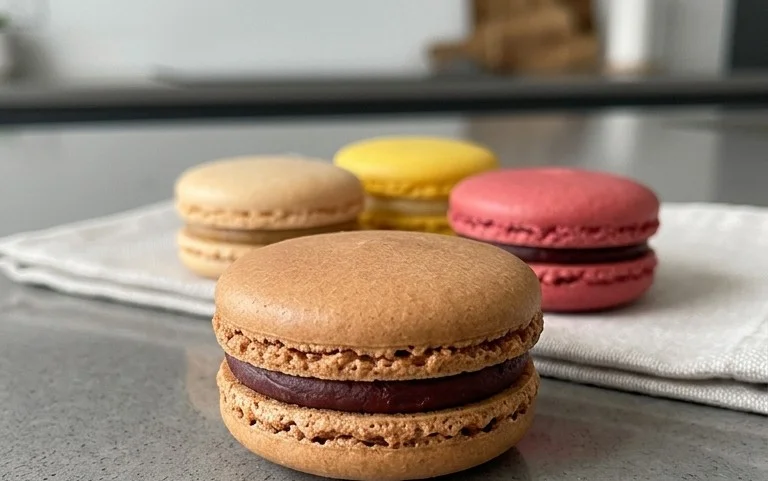
A classic recipe for making delicate and delicious French macarons with a smooth shell and chewy interior. Perfect for any occasion.
Ingredients
-
150 grams sifted super-fine almond flour
-
180 grams powdered sugar
-
1/4 teaspoon salt
-
120 grams large egg whites
-
60 grams granulated sugar
-
4 drops liquid-gel food coloring
-
1 teaspoon pure vanilla extract
Instructions
-
Step 1
Sift almond flour and powdered sugar together twice. Whisk in salt. Set aside. -
Step 2
In a clean bowl, whisk egg whites until foamy. Gradually add granulated sugar, whisking until stiff, glossy peaks form. Add food coloring and vanilla extract, and whisk until just combined. -
Step 3
Gently fold the almond flour mixture into the meringue in two additions, until a thick, lava-like batter forms. Be careful not to overmix. -
Step 4
Transfer batter to a piping bag fitted with a round tip. Pipe small circles onto baking sheets lined with parchment paper or silicone mats. -
Step 5
Tap the baking sheets firmly on the counter to remove air bubbles. Let the macarons rest at room temperature for 30-60 minutes, until a skin forms. -
Step 6
Bake in a preheated oven at 300°F (150°C) for 15 minutes, or until the shells are firm and have developed ‘feet’. -
Step 7
Let macarons cool completely on the baking sheets before removing. Fill with Vanilla Buttercream Frosting or your choice of filling.
Important Information
Nutrition Facts (Per Serving)
It is important to consider this information as approximate and not to use it as definitive health advice.
Allergy Information
Please check ingredients for potential allergens and consult a health professional if in doubt.
Leave a Comment