

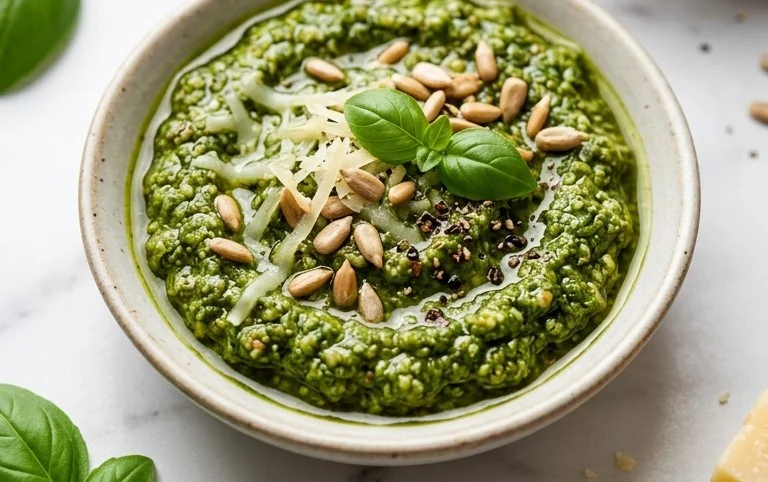
Nut Free Pesto is a revelation for anyone who loves the vibrant, herbaceous punch of traditional pesto but has to steer clear of nuts. For years, I’d watch friends and family delight in classic pesto pasta, pesto chicken, or pesto on a bruschetta, while I sadly passed by. The rich, garlicky aroma is just irresistible, isn’t it? That’s the magic of pesto – its simplicity, its freshness, and its ability to transform everyday dishes into something truly special. But for those with nut allergies or simply seeking a delightful alternative, the quest for a truly satisfying nut free pesto can be a bit of a challenge. That’s where this recipe comes in. I’ve worked hard to develop a version that captures all the essence of beloved pesto, using clever substitutions to create a creamy, flavorful, and wonderfully versatile sauce that everyone can enjoy. Get ready to rediscover your favorite Italian flavors with this incredible nut free pesto!

Nut-Free Pesto: A Deliciously Allergen-Friendly Classic
Pesto is a vibrant, herbaceous sauce that instantly elevates pasta, sandwiches, grilled vegetables, and so much more. Traditionally, pesto relies on pine nuts for its signature texture and nutty depth. However, for those with nut allergies or seeking a more budget-friendly option, a nut-free pesto is an absolute game-changer! This recipe delivers all the bright, savory, and aromatic goodness of classic pesto without any of the allergens. It’s surprisingly simple to make and will quickly become a staple in your kitchen. Forget store-bought versions that can be hit or miss; making your own fresh pesto is incredibly rewarding and allows you to control the ingredients entirely.
The beauty of this nut-free pesto lies in its simplicity and the quality of its core ingredients. We’re focusing on fresh, vibrant flavors that truly sing. The basil provides a fresh, slightly peppery, and aromatic base. Garlic adds a pungent kick that balances the richness. Parmesan cheese brings that essential salty, umami depth. And of course, good quality olive oil binds it all together, creating a smooth, luscious sauce. This recipe is designed to be straightforward, ensuring that even novice cooks can achieve pesto perfection.
Ingredients:
Crafting Your Nut-Free Pesto: Step-by-Step
Let’s get started on creating this fantastic nut-free pesto. You have a couple of excellent options for preparing it, depending on your preferred kitchen tools. A food processor will make this incredibly quick and easy, while a mortar and pestle will give you a more rustic, artisanal texture. Both methods yield delicious results, so choose what works best for you!
Method 1: Using a Food Processor (The Speedy Route)
1. Prepare the Basil and Garlic: Begin extract by thoroughly washing and drying your fresh basil leaves. It’s crucial to have them dry to avoid a watery pesto. You can pat them dry with paper towels or use a salad spinner. Roughly chop the basil to make it easier for the food processor to break down. Peel the garlic cloves. For a milder garlic flavor, you can lightly roast the garlic cloves before adding them, but raw garlic provides that classic pesto punch.
2. Combine Solids and Pulse: Add the prepared basil leaves and peeled garlic cloves to the bowl of your food processor. Pulse several times until the basil and garlic are finely chopped. You want to achieve a coarse paste at this stage. Scrape down the sides of the food processor bowl with a spatula if necessary to ensure all the ingredients are evenly incorporated and chopped. Don’t over-process at this point; we still have more to add.
3. Incorporate Cheese and Seasonings: Add the freshly grated Parmesan cheese, salt, and pepper to the food processor. Pulse again for a few more seconds, just until the cheese is combined with the basil and garlic mixture. At this stage, the mixture will start to look more like a pesto, but it will likely still be a bit dry and crum extractbly.
4. Emulsify with Olive Oil: With the food processor running on low speed, slowly drizzle in the olive oil through the feed tube. Continue to process until the pesto is smooth and well-emulsified. You’re looking for a vibrant green sauce with a thick, spreadable consistency. If you prefer a thinner pesto, you can add a little more olive oil, a tablespoon at a time, until your desired consistency is reached. Taste and adjust the salt and pepper as needed. Remember that Parmesan cheese is salty, so taste before adding too much extra salt.
Method 2: Using a Mortar and Pestle (The Traditional Approach)
1. Prepare the Garlic: Start by placing the peeled garlic cloves into your mortar. Add a pinch of the salt to the garlic. The salt acts as an abrasive, helping to break down the garlic more easily. Grind the garlic with the pestle, working it against the sides of the mortar, until it forms a smooth paste. This initial step of pureeing the garlic is key for developing a good flavor base.
2. Add the Basil Gradually: Add the fresh basil leaves to the mortar in small batches. Grind them with the pestle, using a circular motion, until they are thoroughly bruised and broken down into a paste. Continue adding basil and grinding until all the basil is incorporated and you have a vibrant green paste. This method requires a bit more patience and elbow grease, but the resulting texture is wonderfully rustic.
3. Incorporate Cheese and Olive Oil: Once the basil is finely ground, add the freshly grated Parmesan cheese to the mortar. Mix it in with the pestle until it’s well combined with the basil and garlic paste. Now, begin extract slowly drizzling in the olive oil. Stir and grind with the pestle until the pesto is smooth and emulsified to your liking. You might need to use a spoon to help incorporate the olive oil effectively. Season with pepper, and then taste and adjust the salt as needed.
Serving and Storing Your Nut-Free Pesto
Once your nut-free pesto is ready, you can use it immediately or store it for later. It’s incredibly versatile! Toss it with your favorite pasta, spread it on crusty bread for a sandwich, mix it into mayonnaise for a flavorful dip, or use it as a marinade for chicken or fish.
To store, transfer the pesto to an airtight container. To prevent oxidation and maintain its vibrant green color, you can pour a thin layer of olive oil over the surface of the pesto before sealing the container. This creates a barrier against air. Refrigerated, your nut-free pesto will stay fresh for about 5-7 days. For longer storage, you can freeze it in ice cube trays; once frozen, transfer the pesto cubes to a freezer-safe bag or container. This makes it easy to thaw just the amount you need for a quick meal. Enjoy your delicious, allergen-friendly pesto!
Conclusion:
I hope you’re as excited as I am to whip up this delicious nut free pesto! It’s a fantastic option for anyone with nut allergies or simply looking for a flavorful alternative to traditional pesto. The beauty of this recipe lies in its versatility and vibrant taste, proving you don’t need pine nuts for an incredible herby kick. I’ve found it’s perfect for jazzing up pasta dishes, spreading on sandwiches, dolloping onto grilled chicken or fish, or even as a dip for fresh vegetables. Don’t be afraid to experiment with different herbs or seeds to make it your own!
For serving suggestions, beyond the classics, try swirling it into mashed potatoes, using it as a topping for homemade pizzas, or incorporating it into a potato salad for a refreshing twist. Remember, the key to a great pesto is fresh ingredients. So, go ahead and give this nut free pesto a try – I’m confident you’ll be delighted with the results and discover a new favorite go-to recipe!
Frequently Asked Questions:
What seeds can I use instead of pine nuts in nut free pesto?
Sunflower seeds are an excellent substitute for pine nuts, offering a mild flavor and creamy texture. Pumpkin seeds (pepitas) are another great option, providing a slightly earthier note. You can even combine them for a more complex flavor profile.
Can I make this nut free pesto ahead of time?
Absolutely! This nut free pesto stores beautifully in an airtight container in the refrigerator for up to 5 days. You can also freeze it in ice cube trays for smaller, pre-portioned servings that are perfect for adding a burst of flavor to weeknight meals.
What if I don’t have basil? Can I use other herbs?
Yes, you can definitely get creative with herbs! While basil is classic, spinach or arugula can be used as a base for a peppery twist. You can also mix in parsley, cilantro, or mint for different flavor profiles. Experimentation is part of the fun!
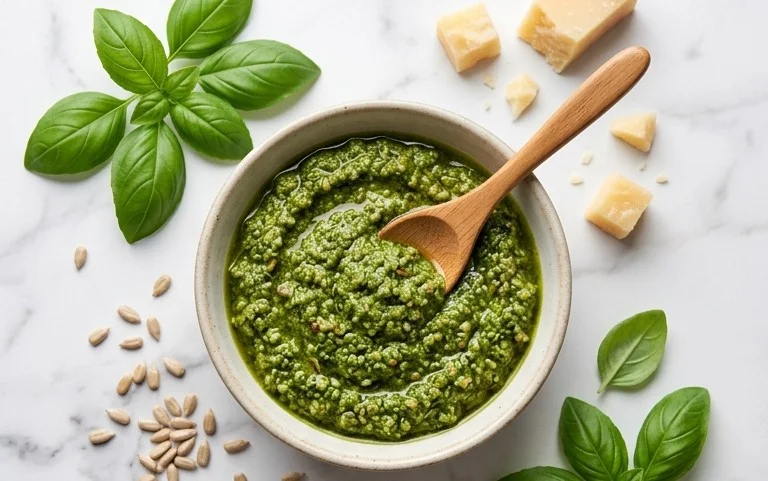
Nut Free Pesto
A delicious and nut-free version of classic pesto, perfect for those with allergies.
Ingredients
-
2 cups fresh basil
-
2 garlic cloves
-
1/2 cup freshly grated Parmesan cheese
-
1/4 cup olive oil
-
1/4 teaspoon salt
-
1/8 teaspoon pepper
Instructions
-
Step 1
Combine basil and garlic cloves in a food processor. -
Step 2
Pulse until finely chopped. -
Step 3
Add Parmesan cheese, salt, and pepper. Pulse again. -
Step 4
With the food processor running, slowly drizzle in the olive oil until smooth and well combined. -
Step 5
Taste and adjust seasoning if necessary. -
Step 6
Transfer pesto to a sealed container and refrigerate.
Important Information
Nutrition Facts (Per Serving)
It is important to consider this information as approximate and not to use it as definitive health advice.
Allergy Information
Please check ingredients for potential allergens and consult a health professional if in doubt.
Leave a Comment