
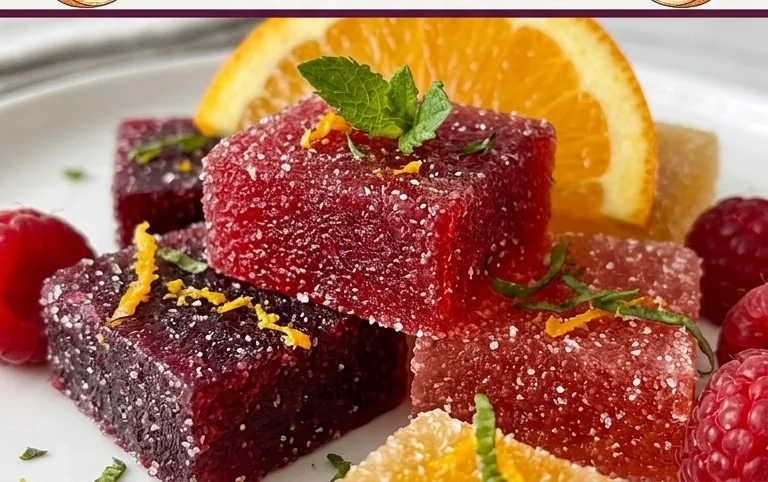
Homemade Pâtes de Fruits (no corn syrup) are little jewels of pure, unadulterated fruit flavor that I simply adore making. Forget those mass-produced versions; the real magic happens when you craft these vibrant, chewy candies in your own kitchen. There’s something incredibly satisfying about transforming fresh fruit into these glistening squares of sunshine, and the fact that we’re achieving that perfect texture without any corn syrup makes them even more special. People fall in love with pâtes de fruits because they offer a delightful burst of intense fruit essence – a pure taste of summer, or whatever fruit you’re craving, in a bite-sized treat. They’re elegant enough for a special occasion but simple enough for an everyday indulgence. This recipe lets us capture that pure fruit flavor, celebrating the natural sweetness and tang, creating a delightful confectionery experience you’ll be proud to share (or hoard for yourself!).

Homemade Pâtes de Fruits (no corn syrup)
There’s something incredibly satisfying about creating your own confectionery from scratch. Pâtes de fruits, those jewel-like, intensely flavored fruit jellies, are often found in high-end patisseries, and you might assume they’re too complicated for a home kitchen. But what if I told you that you can achieve that perfect, yielding texture and vibrant taste without relying on corn syrup? Today, we’re diving into the delightful world of homemade pâtes de fruits, focusing on pure fruit flavor and simple, accessible ingredients. These little gems are perfect for gifting, elevating your dessert board, or simply enjoying as a special treat. We’ll be skipping the corn syrup and relying on the magic of pectin for that signature bounce and chew.
Ingredients:
*Note on Pectin: For this recipe, we’re using “classic” or “low-methoxyl” pectin. This type requires calcium and acid (which the lemon juice provides) to set. You can find it in most well-stocked grocery stores or online. It’s crucial to use the right type of pectin for the desired texture. Don’t confuse it with powdered fruit pectin or commercial liquid pectin blends that may have added sugars or different activation requirements.
Crafting Your Pâtes de Fruits
The process of making pâtes de fruits, while requiring a little attention to detail, is surprisingly straightforward. It’s all about careful measurement and controlled heating to activate the pectin and achieve the perfect set.
Preparation is Key
Before you even think about turning on the stove, it’s essential to have everything prepared. This is crucial for success, especially when working with pectin, which can set quite quickly once it reaches the right temperature.
1. Prepare Your Molds: You’ll need a shallow baking dish or an 8×8 inch square pan. Lightly grease it with a neutral oil or spray it with baking spray. Alternatively, you can line it with parchment paper, leaving some overhang on the sides to make lifting out the set jelly easier. Once the jelly is firm, you’ll be cutting it into small squares, so having a smooth, even surface to pour onto is important.
2. Combine Dry Ingredients: In a small bowl, whisk together the granulated sugar and the classic pectin. It’s vital to combine them thoroughly at this stage. If the pectin isn’t evenly distributed within the sugar, you might end up with pockets of unset jelly or a gummy texture. Whisking them together coats the pectin granules with sugar, which helps prevent clumping when you add the liquid. Set this mixture aside.
The Cooking Process: Building Flavor and Texture
Now for the fun part – transforming these simple ingredients into delicious fruit jewels!
3. Heat the Fruit Juice: Pour the 2 cups of fruit juice into a medium saucepan. Add the tablespoon of freshly squeezed lemon juice. The lemon juice not only adds a touch of brightness to the fruit flavor but also plays a crucial role in activating the pectin. Heat this mixture over medium heat, stirring occasionally, until it just begin extracts to simmer. You don’t want a rolling boil at this stage, just a gentle simmer.
4. Incorporate the Pectin Mixture: Once the fruit juice is simmering, gradually whisk in the sugar and pectin mixture. It’s important to add this slowly while whisking continuously. This slow addition, combined with constant whisking, ensures that the pectin dissolves evenly and the sugar starts to melt without clumping. Continue to stir constantly until the mixture comes to a full, rolling boil. A rolling boil is one that cannot be stirred out.
5. Boil to Set Point: Now, maintain this rolling boil and continue to cook the mixture, stirring constantly, for about 1 to 2 minutes. The exact time can vary slightly depending on your stove and pan, but the goal is to reach the setting temperature for the pectin. A candy thermometer can be very helpful here; you’re aiming for a temperature between 220°F and 225°F (104°C and 107°C). If you don’t have a thermometer, you can perform the “wrinkle test”: drop a small amount of the mixture onto a chilled plate. If it gels and wrinkles when pushed with your finger, it’s ready. Be very careful, as this mixture is extremely hot. The vigorous boiling helps to evaporate excess liquid and concentrate the sugars, which is essential for achieving the correct texture.
Cooling and Finishing Touches
The final steps involve letting your creation cool and then transforming it into those beautiful pâtes de fruits we know and love.
6. Pour and Cool: Immediately after reaching the setting point, carefully pour the hot mixture into your prepared baking dish. Try to pour it as evenly as possible to create a smooth surface. Let the mixture cool at room temperature for about 30 minutes, then transfer it to the refrigerator. Allow it to chill and set completely, which usually takes at least 3 to 4 hours, or preferably overnight. Patience here is key; rushing the setting process will result in soft, sticky, unset pâtes de fruits.
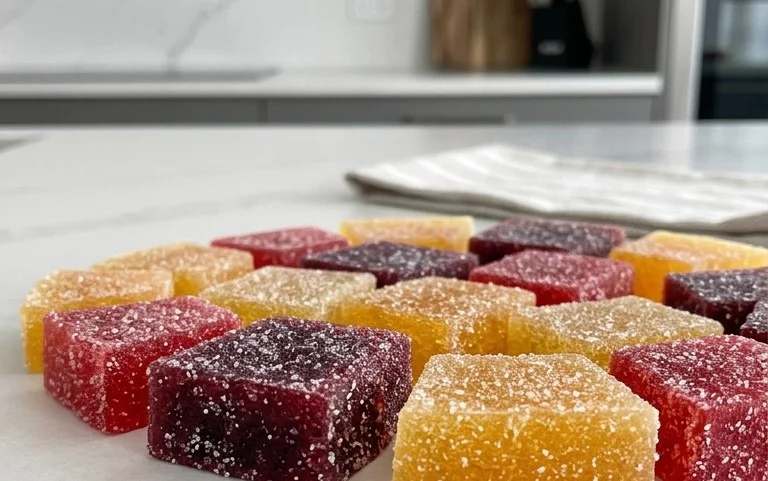
7. Cut and Coat: Once fully set, gently lift the jelly out of the pan using the parchment paper overhang, or carefully loosen the edges if you greased the pan. Place it on a clean cutting board. Using a sharp knife or a pizza cutter, cut the jelly into small, bite-sized squares, approximately 1 inch by 1 inch. In a shallow dish or on a plate, spread out a generous amount of granulated sugar. Gently roll each fruit square in the sugar, coating all sides. This coating not only prevents them from sticking together but also adds a delightful textural contrast to the soft jelly inside. Shake off any excess sugar. Your homemade pâtes de fruits are now ready to be enjoyed or shared! Store them in an airtight container at room temperature for up to a week.
Conclusion:
You’ve now mastered the art of creating vibrant, intensely flavorful homemade pâtes de fruits without relying on corn syrup! This recipe is truly wonderful because it allows you to control the sweetness and highlight the natural, pure taste of your chosen fruits. The absence of corn syrup means a cleaner, brighter fruit experience, letting the true essence of berries, citrus, or tropical fruits shine through. These delightful little gems are perfect for elevating any dessert platter, gifting to loved ones, or simply enjoying as a sophisticated treat with your afternoon coffee or tea. Imagin extracte them nestled alongside a rich chocolate cake, as a colourful addition to a cheese board, or even finely diced and incorporated into a creamy panna cotta. Don’t hesitate to experiment with different fruit combinations – mango and passionfruit, raspberry and lychee, or even a tart grapefruit and blood orange blend are fantastic options. The possibilities are truly endless! I wholeheartedly encourage you to give this recipe a try; the satisfaction of creating these beautiful, delicious pâtes de fruits from scratch is immense.
Frequently Asked Questions:
Why is my pâtes de fruits not setting properly?
This is often due to the sugar syrup not reaching the correct temperature. Pâtes de fruits need to reach a specific high temperature (around 115-118°C or 239-244°F) to set correctly. Ensure you’re using a reliable candy thermometer and that the syrup is bubbling vigorously before removing it from the heat. Also, be patient; they need a good amount of time to cool and firm up in the refrigerator.
Can I use artificial sweeteners instead of sugar?
Unfortunately, artificial sweeteners do not behave the same way as sugar when heated and will not achieve the necessary texture and setting point for pâtes de fruits. The sugar is crucial for both structure and achieving that signature chewy, jelly-like consistency. For the best results, stick to granulated sugar for this recipe.
Homemade Pâtes de Fruits (no corn syrup)
A delightful homemade fruit jelly candy made without corn syrup, perfect for a sweet treat.
Ingredients
-
2 cups fruit juice (orange and pomegranate)
-
1 cup granulated sugar, plus more for coating
-
3 tablespoons classic pectin
-
1 tablespoon freshly squeezed lemon juice
Instructions
-
Step 1
In a medium saucepan, whisk together the fruit juice and pectin until well combined. -
Step 2
Add the granulated sugar and lemon juice to the saucepan. Stir to combine. -
Step 3
Place the saucepan over medium-high heat and bring the mixture to a boil, stirring constantly. Once boiling, continue to cook for 2 minutes, stirring vigorously. -
Step 4
Remove from heat and immediately pour the mixture into an 8×8 inch baking dish that has been lightly greased or lined with parchment paper. -
Step 5
Allow the mixture to cool at room temperature for about 30 minutes, then refrigerate for at least 4 hours, or until firm. -
Step 6
Once firm, turn the jelly out onto a clean surface dusted with granulated sugar. Cut into desired shapes using a sharp knife or cookie cutters. -
Step 7
Toss the cut pieces in additional granulated sugar to coat them completely. Store in an airtight container at room temperature.
Important Information
Nutrition Facts (Per Serving)
It is important to consider this information as approximate and not to use it as definitive health advice.
Allergy Information
Please check ingredients for potential allergens and consult a health professional if in doubt.

Leave a Comment