

Dairy Free Pesto is a revelation for anyone who loves the bright, herbaceous, and garlicky goodness of traditional pesto but needs to skip the cheese. For years, I’ve adored pesto on pasta, as a dip, or slathered on a sandwich, but the dairy component always meant a little internal debate. Then I discovered how incredibly simple and satisfying it is to create a truly delicious dairy free pesto that captures all the vibrant flavors without compromise. This isn’t just a substitute; it’s a culinary triumph in its own right, offering a burst of freshness that can elevate any meal. What makes this dairy free pesto so special? It’s the perfect harmony of basil, pine nuts, garlic, and olive oil, enhanced by a secret ingredient that provides that satisfying savory depth you crave. Get ready to experience pesto in a whole new, wonderfully dairy-free way!

Dairy Free Pesto
When I first started exploring a dairy-free lifestyle, one of the things I missed most was pesto. That vibrant, herbaceous, nutty, and slightly cheesy sauce is such a versatile staple in my kitchen, perfect for pasta, spreading on sandwiches, dipping vegetables, or even dolloping onto roasted proteins. The good news is, creating a delicious dairy-free pesto is incredibly easy and only requires a few simple swaps. Forget the store-bought versions that often rely on parmesan for that signature flavor; this homemade dairy-free pesto packs just as much punch, if not more, and you know exactly what’s going into it. It’s a game-changer for anyone who’s dairy-sensitive or simply looking for a fresh, vibrant sauce.
This recipe focuses on bringin extractg out the natural flavors of fresh basil, bright lemon, and rich nuts, with a secret ingredient that mimics the umami of cheese without any dairy at all. It’s a truly satisfying condiment that will elevate any dish it graces. Let’s get started on creating this vibrant green goodness!
Ingredients:
Preparing Your Ingredients
Before we dive into the blending process, it’s a good idea to get all your ingredients prepped and ready. This will make the whole pesto-making experience smooth and efficient. Start by washing your basil leaves thoroughly and gently patting them dry. Excess water can dilute the flavor of your pesto, so a good drying is important. If you’re using pine nuts, a quick toast can really enhance their flavor and texture, though it’s not strictly necessary. To toast them, simply spread them in a dry skillet over medium-low heat and stir frequently until they are lightly golden and fragrant, about 3-5 minutes. Watch them closely as they can burn quickly! For the garlic, peel the cloves. You can either mince them very finely by hand or leave them whole, as the food processor will take care of breaking them down. Squeeze the juice from your half lemon; a handy tip is to roll the lemon on your countertop with a bit of pressure before cutting it in half, as this helps release more juice.
Making the Pesto
Now for the fun part – transforming these fresh ingredients into a luscious pesto! The process is remarkably simple, and a food processor or blender will be your best friend here.
In the bowl of a food processor, combine the packed basil leaves, pine nuts (or your chosen alternative), and the peeled garlic cloves. Pulse these ingredients a few times until they are roughly chopped and resemble a coarse meal. You don’t want it completely pulverized at this stage; a little texture is nice. This initial pulsing helps break down the larger components, making it easier for the processor to create a smooth sauce in the next steps. If you find your basil is really bulky, you might need to stop and scrape down the sides of the bowl a couple of times to ensure everything gets incorporated evenly.
Add the lemon juice and salt to the food processor. If you are using the nutritional yeast for that cheesy, umami flavor, add it now as well. Pulse the mixture again until these ingredients are well combined with the basil and nuts. The lemon juice will add a bright tangin extractess that cuts through the richness, and the salt will enhance all the other flavors. The nutritional yeast, with its savory, cheesy notes, is a fantastic dairy-free substitute for Parmesan, giving the pesto a depth of flavor that’s surprisingly similar to traditional pesto. It’s important to add the liquid ingredients now so they can start to emulsify with the other components.
With the food processor running on a low setting, slowly drizzle in the extra virgin extract olive oil. Continue processing until the pesto reaches your desired consistency. This is where you control the texture – if you like a chunkier pesto, add less oil and process for a shorter time. For a smoother, more sauce-like consistency, continue to drizzle in the olive oil until you achieve it. It’s important to add the oil slowly while the processor is running. This technique, known as emulsification, helps to create a stable, creamy sauce rather than an oily, separated one. You might not need all of the olive oil, or you might find you want a little more, depending on how thick you like your pesto. Taste and adjust seasonings at this point – you might want a little more salt, a touch more lemon, or even a pinch of red pepper flakes for a hint of heat.
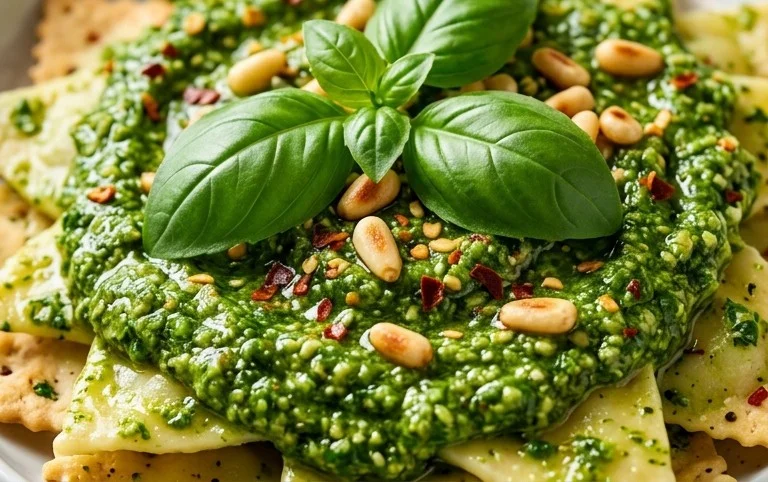
Once your pesto has reached the perfect consistency and flavor, stop the food processor. Scrape down the sides of the bowl one last time to ensure all the ingredients are fully incorporated. Give it a final gentle stir with a spatula. At this point, you can either use your fresh pesto immediately or store it for later. If you’re planning to use it right away, you’re all set! It’s fantastic tossed with your favorite pasta, spread on a bruschetta, or as a dip for crudités. The aroma alone is enough to make your mouth water, and the vibrant green color is a testament to the freshness of the ingredients.
To store your delicious dairy-free pesto, transfer it to an airtight container. For best results and to preserve its vibrant green color, pour a thin layer of olive oil over the surface of the pesto before sealing the container. This acts as a barrier against oxidation, which can cause the pesto to turn brown over time. You can also divide it into smaller portions and freeze it in ice cube trays for single-serving portions that are easy to thaw and use. Properly stored in the refrigerator, this pesto should stay fresh for about 5-7 days. Freezing will extend its shelf life significantly, allowing you to enjoy this homemade goodness for months to come. It’s a wonderful way to have a quick, flavorful addition to meals anytime.
Enjoy your homemade dairy-free pesto! It’s a testament to how simple, fresh ingredients can create something truly spectacular, proving that you don’t need dairy to achieve incredible flavor and texture.
Conclusion:
I hope you’re as excited to try this delicious dairy free pesto as I am! This recipe is a game-changer for anyone looking to enjoy the vibrant flavors of classic pesto without the dairy. It’s incredibly versatile, bursting with fresh basil, garlic, and nutty undertones, and remarkably easy to whip up in minutes. Whether you’re vegan, lactose intolerant, or simply looking for a lighter alternative, this dairy free pesto proves that you don’t need cheese to achieve an intensely satisfying pesto.
Think of all the ways you can use this amazing sauce! It’s perfect tossed with your favorite pasta (gluten-free or regular!), as a flavorful spread on sandwiches and wraps, drizzled over roasted vegetables, or even as a dip for crusty bread. For variations, don’t be afraid to experiment! Swap out pine nuts for walnuts or almonds, add a pinch of red pepper flakes for a spicy kick, or even incorporate a handful of spinach for an extra boost of nutrients and a slightly milder flavor. I truly encourage you to give this dairy free pesto a try – you might be surprised at how much you love it!
Frequently Asked Questions:
Can I freeze this dairy free pesto?
Absolutely! This dairy free pesto freezes beautifully. Spoon it into an ice cube tray and freeze until solid, then transfer the pesto cubes to a freezer-safe bag. This makes it super easy to grab single servings as needed. Alternatively, you can freeze it in larger portions in airtight containers.
What kind of oil is best for this recipe?
Extra virgin extract olive oil is highly recommended for its superior flavor. Its peppery notes complement the basil and garlic perfectly. However, a good quality light olive oil or even avocado oil can be used if you prefer a more neutral taste.
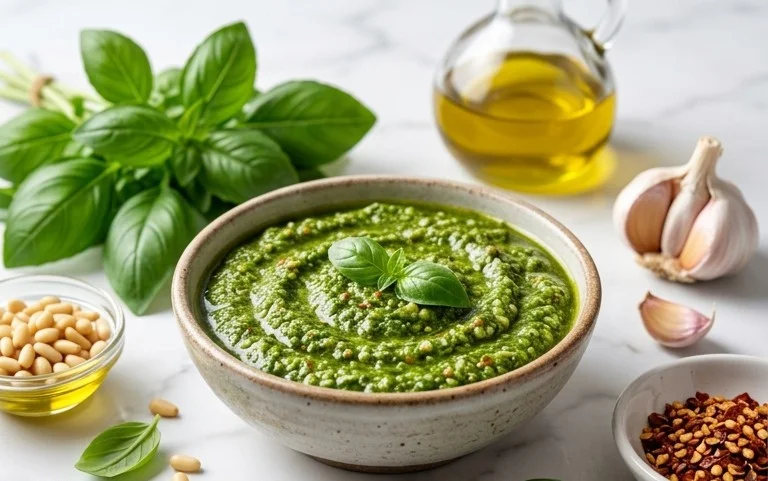
Dairy Free Pesto
A vibrant and flavorful dairy-free pesto made with fresh basil, pine nuts, garlic, and lemon. Perfect for pasta, sandwiches, or as a dip.
Ingredients
-
3 cups basil
-
1/2 lemon (juiced)
-
1/2 cup pine nuts
-
2 cloves garlic
-
1/4 cup olive oil
-
1/2 tsp salt
-
2 tbsp nutritional yeast
Instructions
-
Step 1
In a food processor, combine basil, pine nuts, garlic, salt, and nutritional yeast. -
Step 2
Pulse until coarsely chopped. -
Step 3
With the food processor running, slowly drizzle in the olive oil until the pesto is well combined and has a smooth consistency. -
Step 4
Add the lemon juice and pulse a few more times to incorporate. -
Step 5
Taste and adjust seasoning if needed. -
Step 6
Transfer to an airtight container and store in the refrigerator.
Important Information
Nutrition Facts (Per Serving)
It is important to consider this information as approximate and not to use it as definitive health advice.
Allergy Information
Please check ingredients for potential allergens and consult a health professional if in doubt.

Leave a Comment